
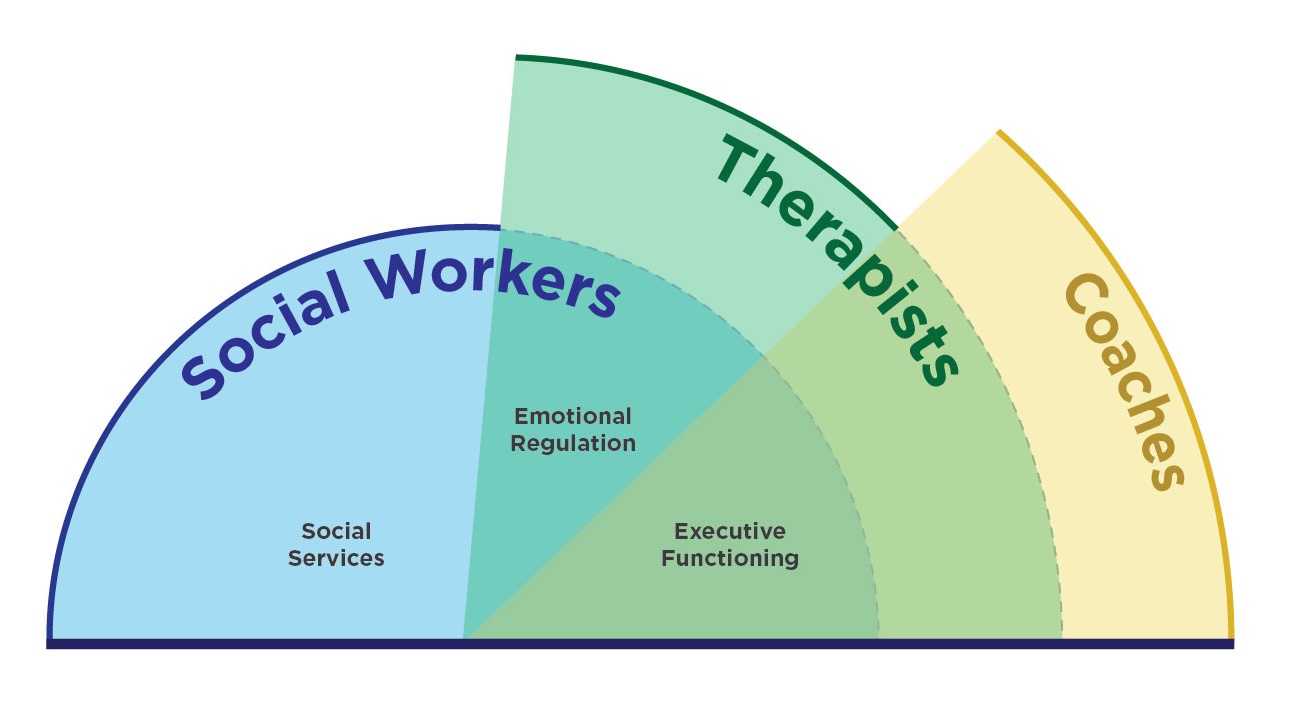

There are tons of ways to access professional support in our community, it can be overwhelming to parse the difference between them all let alone figure out which is the most suitable for your particular situation. Some situations have easy answers; for example, if you are seeking ADHD-related medication in British Columbia you want to talk to someone in the medical field, such as a family doctor, nurse practitioner, or psychiatrist. But what about when you want support with managing a schedule, learning how to communicate with your autistic partner, or quiet the self-blame in your neurodivergent head? These questions are less easy to answer.
To the untrained eye, it isn’t obvious what the difference between a neurodivergent coach, therapist, and social worker is. I often find myself explaining the difference in standard consultation calls to lost individuals who are overwhelmed by all the information online – being available doesn’t equate to accessible! You are not stupid, you just don’t know. Allow me to explain.
A Neurodivergent Social Worker
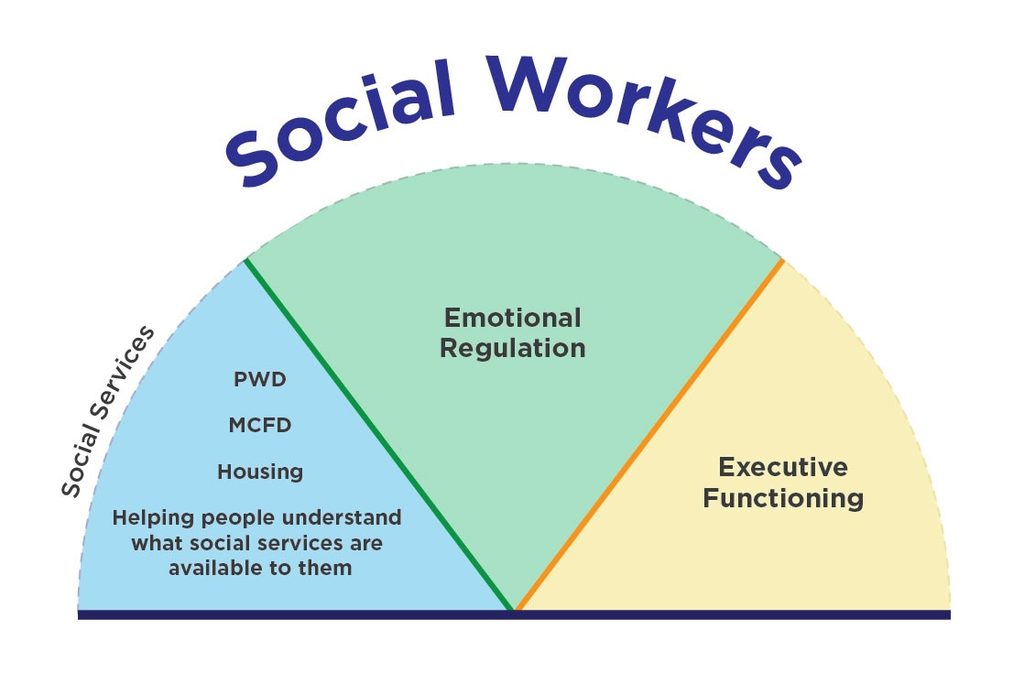
These guys do it all – they have a broad scope of practice, and they differ from the other two in their knowledge of social services. Because of this large spectrum, there are a plethora of kinds of socials workers: some may focus on emotions more, while others perhaps specialize in housing crises or domestic violence support.
If you are a neurodivergent person who is interested in PWD, BC Housing, or simply want to learn what supports are available to you while you deal with the burdens of capitalism, you might want to connect with a neurodivergent social worker. These people shine in moments of crisis, being fierce advocates for neurodivergents who might blank when navigating an intense problem for the first time. Every social worker I have had the pleasure of conversing with knows “the system is broken” and believes in the power of communal resources. While a therapist can have these views, they do not necessarily hold these sentiments because a therapy degree doesn’t cover social services as comprehensively as social work degrees do.
A Neurodivergent Therapist
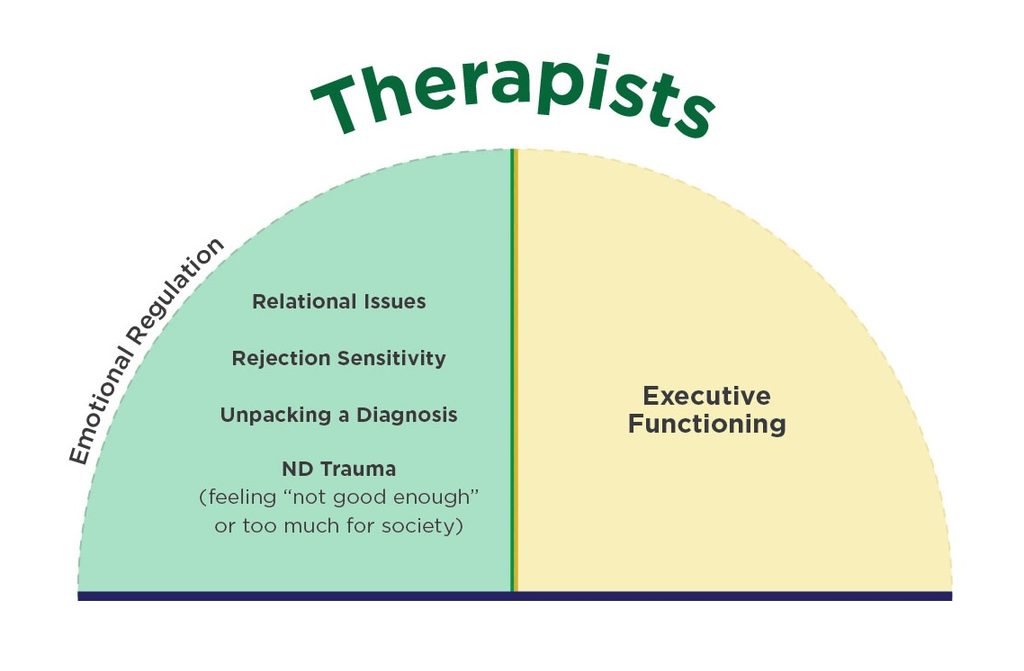
Therapists, aka Counsellors, have a special interest in supporting people with their big and confusing emotions. A neurodivergent therapist understands not only the standard hurdles the neurodivergent community wrestles with on a regular basis, but also the skills needed in order to function comfortably in a neurotypical world. We won’t blame you for your problems, but will work with you to develop ways of coping with the unique issues you have. A neurodivergent therapist will understand how systemic oppression impacts your ND life and is more likely to celebrate your quirks than a neurotypical therapist. Our job is to mentally help you unpack all this in a way that is not overwhelming, in a way that breeds stress tolerance, in a way that challenges the shame society would rather see you hide behind. Like coaches, we will help you develop and navigate accommodations in order to function in dominant-normative social systems. Unlike coaches, we also know when to lean back into self-compassion, stress-tolerance, and address the trauma related to existing in a neurotypical world.
If you are a neurodivergent person who is privileged enough to possess housing/financial stability and your needs relate more to the overwhelming frustration of being a neurodivergent person in a neurotypical world, you might want to reach out to a therapist. I would be remiss to not throw a shout out toward the diverse team of clinical counsellors here at Sunward Journeys.
A Neurodivergent Coach
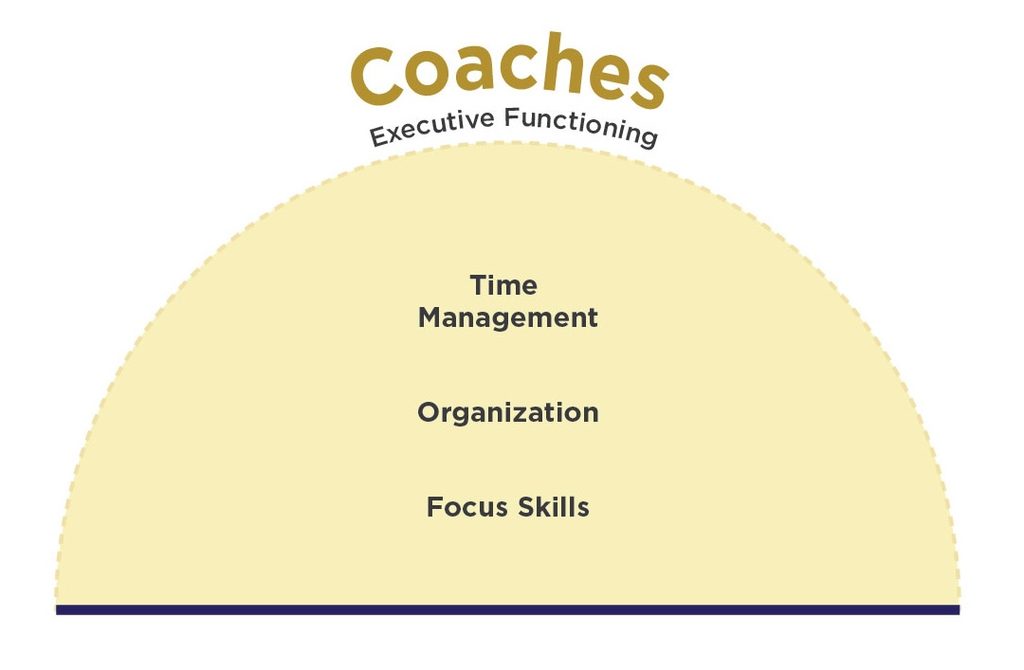
Neurodivergent coaches have the most specialized scope of practice. While a coach is likely to refer out to a therapist or social worker for help addressing complex emotions or trauma, they might be the most practical of all of us. Coaches are more likely to have worksheets and step by step guides because they would rather focus on the external skills you seek in order to rival neurotypical expectations. Any coach I have spoken to explains that an important quality of their job is ethically knowing when to refer out: if you are having a conversation about how to communicate with your boss/teacher that lingers into trauma, your coach will explain that they do not have the education to manage this and will refocus the conversation on skill building.
As you can see, neurodivergent coaches have the most limited scope of practice, but also the most specialized. If you do not have a need to explore social services and have a clear understanding of how you view your brain, but still struggle with time management and other executive functioning skills, you might want to give coaching a try.
Beyond the Trifecta
While the neurodivergent community isn’t limited to these three helping professions, these are the tried-and-true that tend to focus on the difficulties around mental workload. Some others that were not mentioned: Occupational Therapist, Support Worker, Behaviour Interventionist, School Counselling Advisor, Medical Doctor, Nurse Practitioner, Psychologist, Psychiatrist… heck, I even want to give a shout out to your local librarian who can assist with reading accommodations! The list is rather endless. Regardless of one’s title, ask a professional what they specialize in before getting invested because accessing the support suited for your unique needs matters.
References
1. All information was gathered by August Wambold between 2016 and 2026 from various conversations with those in the neurodivergent helping profession. If you feel I have inaccurately portrayed your vocation, please contact me about it!!
2. Graphic design by Kayla Becerra.


